
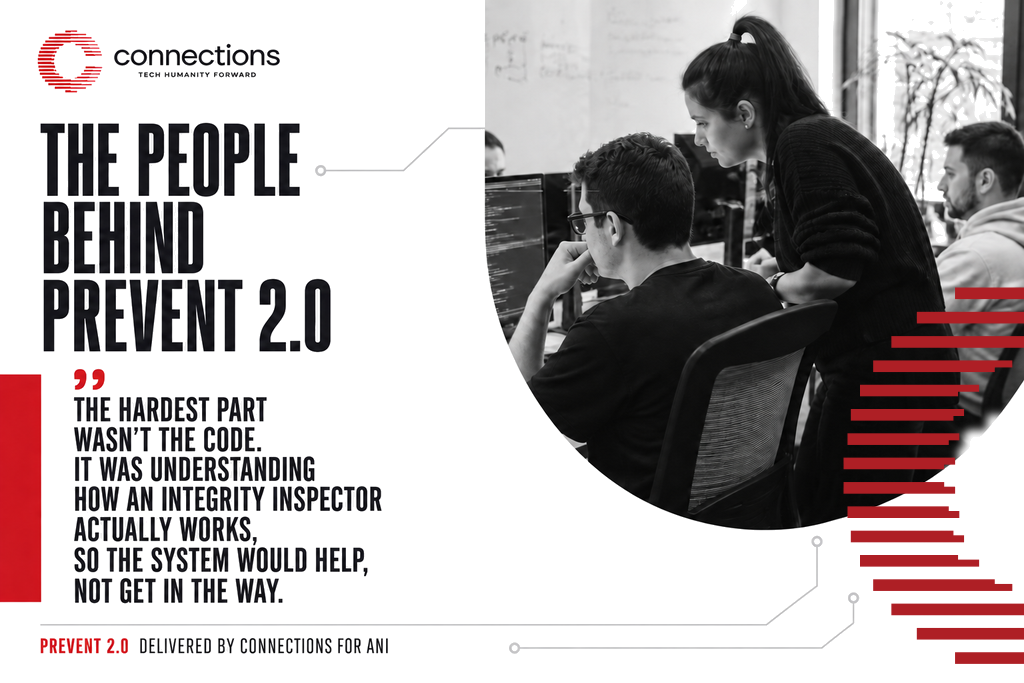
The project team’s structure was set by ANI through minimum human resource requirements, split into key and non-key experts. The Connections team included, among others, a technical manager (team lead), business analysts, a systems architect, a cybersecurity expert, a database administrator, software development, testing and hardware/virtualization infrastructure experts, alongside GDPR, technical support, training, backup and recovery, business process management, and business intelligence experts.
It’s a structure built to cover the project’s entire life cycle — from business analysis and solution architecture to development, security, testing, legal/GDPR compliance, and end-user training — reflecting the complexity of a system that interconnects multiple government databases while simultaneously meeting strict technical, security, and legal requirements.
In a system processing personal data at national scale, security isn’t a feature added later — it’s the starting point of the architecture. Just as important was understanding the real workflow of integrity inspectors: the hardest part of the project wasn’t writing the code; it was understanding how an inspector actually works through a case, so the system would support that work rather than get in the way.