
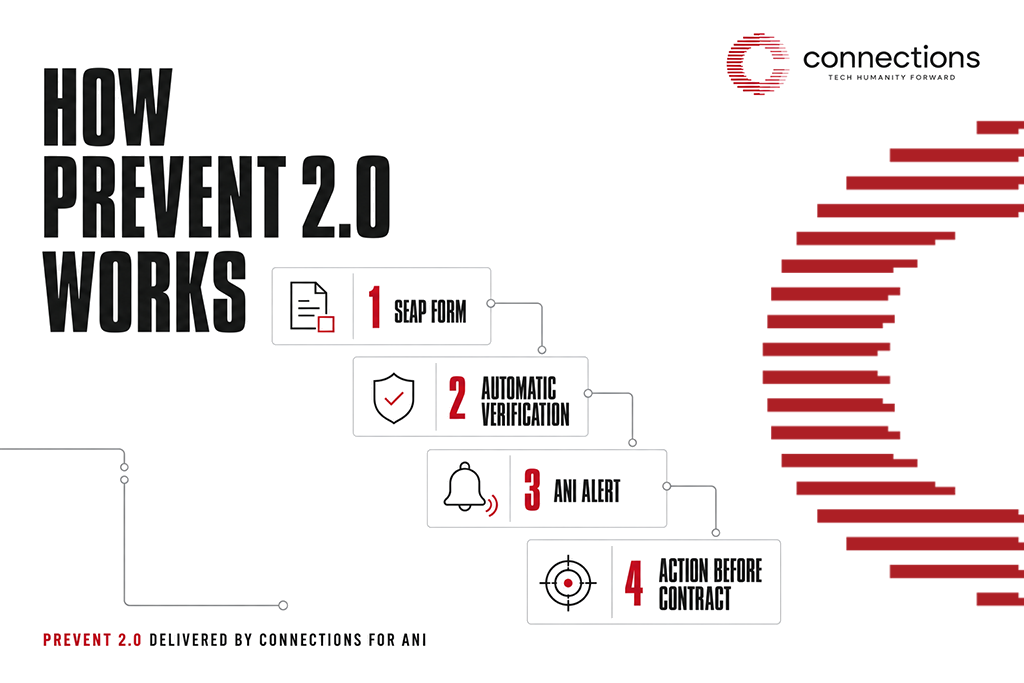
The starting point of the entire process is the Integrity Form, which contracting authorities are required to fill in through SEAP at key moments of a public procurement procedure: the opening of bids, the final report, and contract award.
The data from the form is automatically cross-checked by PREVENT against government databases — for example, DEPABD for identity records and ONRC for company records. The goal is simple: to check whether anyone involved in the award decision has a connection — family, professional, or business — to anyone in the leadership of a bidding company.
If such a connection is detected, the system issues an Integrity Warning, sent to ANI inspectors for review and, subsequently, to the contracting authority, which is legally required to take corrective action — without halting the ongoing procurement procedure.
For ANI inspectors, day-to-day work happens in the Analysis Module: a single search engine where they enter the starting data for a case and receive, from one query, results across every database they have access to. The system automatically limits what each user sees, based on their role — the “need to know” principle. One key feature allows cascading investigation: the result of one search can become the starting point for a new one, letting inspectors trace indirect connections, not just a direct match.